
97. Glass-Technology Conference
Join SEFPRO at the 97th Glass-Technology Conference, organized by the Deutsche Glastechnische Gesellschaft (DGG), Europe's leading event on glass innovation.
SEFPRO at Glass-Technology Conference
A new AZS refractory for improved electrical stability and corrosion resistance in highly boosted glass furnaces
One of the main challenges for glass makers in the coming years will be to adapt their melting technology in order to reduce CO2 emissions and provide decarbonized glass. In this perspective, a significant part of hydrocarbon combustion will gradually be replaced by electric melting. For a robust high electrical boosting furnace, the choice of an adapted refractory materials is crucial to optimize throughput and furnace lifetime. [1]
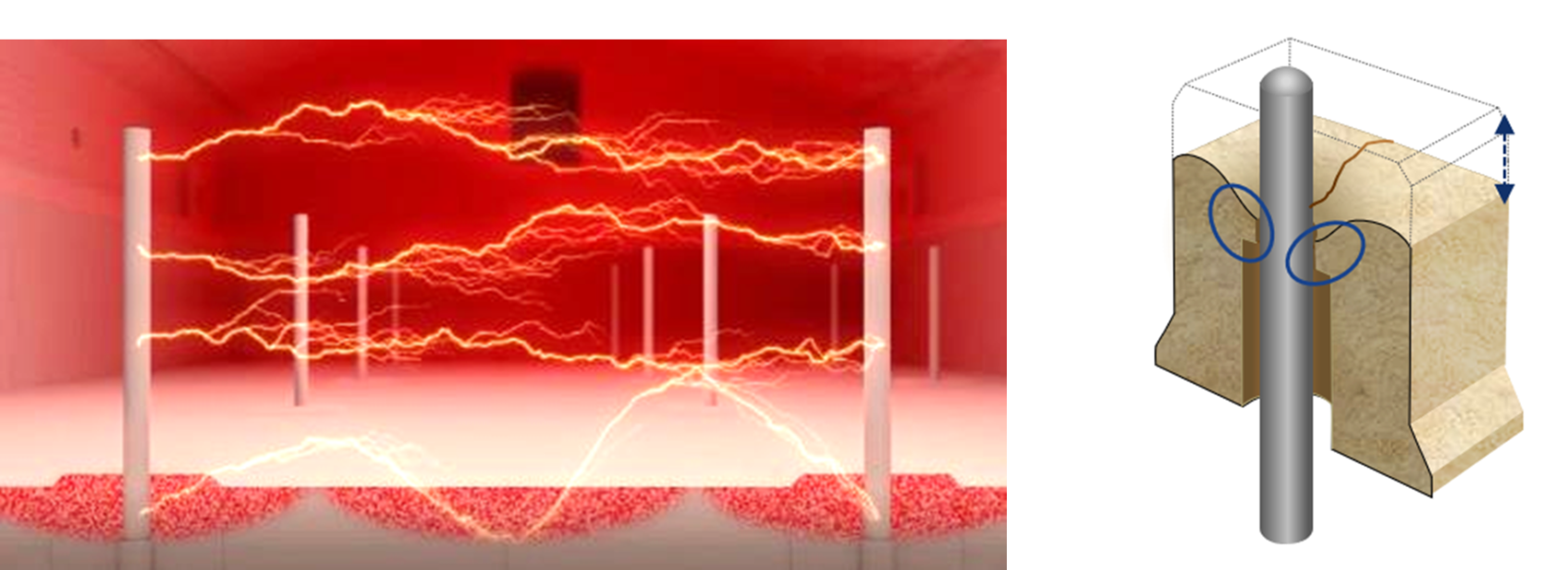
Figure 1. High boosting furnaces will put particular stress on the refractories adjacent to the electrodes. For electrode blocks this can for example result in funnel corrosion and current leakage into the refractory and thus highly impact furnace operation.
In a first step we identify the effect of high electrical power on fused cast refractories and the resulting pain points for glass producers. In predominantly electrically powered furnaces, the glass melt is heated by direct Joule heating with most of the heat being generated close the electrodes. The resulting increase in paving temperatures, strong electric currents, and high local glass velocity lead to high stresses, especially on electrode blocks, which might become the future bottle neck for a smooth furnace operation. [2]
We will present a new AZS material which was specially developed to better perform under these conditions. Thanks to a finely tuned glassy phase and an increased zirconia content, this material shows an improved corrosion resistance compared to standard AZS products and a higher electrical resistivity. To test this new material, as well as our standard fused cast products, a laboratory electric pilot melter was constructed to quantify refractory performances under high electrical boosting conditions. This setup allows us to analyse the evolution of chemical and physical properties of the materials, when being impregnated by glass and subject to intensive electrical currents. Moreover, the effect of these changes on the melter electrical operation parameters are monitored and evaluated.
With our experience in refractory development, competencies in numerical simulation, and experimental testing facilities we are dedicated to accompany our customers to find the most suitable solution for their hight boosting furnace.
Authors & Affiliations:
I.Gross*1, D. Bolore1, O. Citti1, M. Gaubil2, P. Fournier2, F. Pomar2
1 SGR Provence, 550 Rue Alphonse Jauffret, 84300 Cavaillon, France
2 SEFPRO, 2539 route de Sorgues, 84131 Le Pontet Cedex, France
References:
[1] R, Conradt; Journal of Asian Ceramic Societies, 2019, 7:4, 377-396.
[2] J. Mills, Glass international, 2022, Click to go to website