In 2025, SEFPRO strengthened its long-term commitment to sustainable development, achieving measurable progress across its global operations. Through continuous innovation, operational improvements, and close collaboration across the value chain, the company is reducing its environmental footprint while supporting the glass industry’s transition toward more sustainable production. These efforts are part of a broader roadmap to develop refractory solutions that enable more efficient, responsible, and high-performance glass furnace operations.
Reducing CO₂ emissions across all scopes
Decarbonizing operations and energy consumption
Reducing CO₂ emissions remains a key priority for SEFPRO. Over the past years, the company has significantly improved its environmental performance through industrial investments, process optimization, and increased use of decarbonized energy.
Key initiatives include:
• Increased use of decarbonized electricity
• Deployment of solar energy solutions
• Reduced dependence on natural gas
• Electrification of processes and optimization of firing cycles
These actions have delivered tangible results:
• Scope 1 CO₂ emissions reduced by 35%
• Scope 2 CO₂ emissions reduced by 90%
In parallel, digital monitoring solutions such as SEFPRO GUARD® monitoring solution help track furnace conditions in real time, enabling operators to better understand energy consumption and anticipate performance deviations.
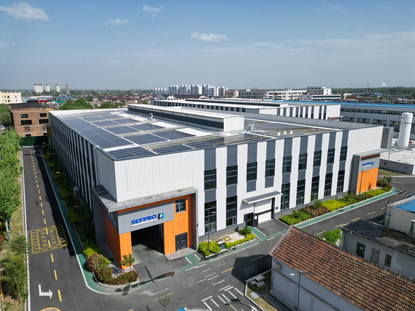
Scope 3: working with the value chain
SEFPRO is also accelerating its efforts on Scope 3 emissions by working closely with suppliers and partners to:
• Develop certified Life Cycle Assessments (LCAs)
• Reduce upstream emissions
• Introduce more sustainable packaging using recycled and bio-based materials
Eco-design and energy efficiency
Designing products with lower environmental impact
Sustainability is embedded directly into SEFPRO’s product development strategy. By optimizing design and reducing the use of natural resources, the company helps customers improve furnace efficiency while lowering environmental impact.
The development of low-fired refractory products, such as LEAF and ALKLEAR, reduces energy consumption during manufacturing while maintaining high technical performance. Combined with advanced monitoring tools, these innovations enable glassmakers to optimize thermal efficiency and extend furnace campaign life.
As highlighted by Antoine Peyrude, SEFPRO CEO:
“Together we can assist better our clients in improving performance and productivity and in advancing towards the decarbonisation of the glassmaking process.”
Water management and hydric stress reduction
Improving water efficiency across sites
Efficient water management is a priority, particularly in regions exposed to hydric stress. SEFPRO has implemented several initiatives to improve water efficiency across its sites, including:
• Installation of additional water meters
• Deployment of closed-loop systems on high-consumption equipment
• Construction of rainwater harvesting systems
These actions have led to significant results:
• Water withdrawals reduced by 37% vs 2017
A continuous sustainability journey
Through innovation, operational improvements, and close collaboration with customers and partners, SEFPRO continues to contribute to more efficient, reliable, and sustainable glass furnace operations.
The objective remains clear:
reduce environmental impact while delivering high-performance solutions for the glass industry
Protecting biodiversity around industrial sites
Enhancing local ecosystems
Beyond industrial performance, SEFPRO integrates biodiversity into its sustainability approach. Studies conducted in collaboration with universities and specialized partners help better understand and protect ecosystems around production sites.
These initiatives support the development of concrete actions to preserve natural habitats and enhance local biodiversity.
People at the core of sustainability
Engaging teams and driving change
Sustainability at SEFPRO is driven by people. Employees across the organization actively contribute to implementing and promoting sustainable practices.
In 2025:
• 80% of employees participated in Climate Fresk training
• Numerous team-led initiatives were launched
• New programs promoted diversity and inclusion
These efforts were recognized through the internal Act & Impact Sustainable Development Challenge, highlighting the most impactful initiatives across the Group.
Transparency and customer support through life cycle assessments
Supporting customers with reliable data
Transparency is a key pillar of SEFPRO’s sustainability strategy. All sites are evaluated annually through EcoVadis assessments, demonstrating continuous improvement in sustainability performance.
SEFPRO also supports customers by providing:
• Life Cycle Assessments (LCAs) for key products
• 21 Environmental Product Declarations (EPDs) available via SEFPROLink
• Additional EPDs currently under development
These tools help customers better understand and reduce the environmental footprint of refractory materials used in their furnaces.
Transparency and customer support through life cycle assessments
Supporting customers with reliable data
Transparency is a key pillar of SEFPRO’s sustainability strategy. All sites are evaluated annually through EcoVadis assessments, demonstrating continuous improvement in sustainability performance.
SEFPRO also supports customers by providing:
• Life Cycle Assessments (LCAs) for key products
• 21 Environmental Product Declarations (EPDs) available via SEFPROLink
• Additional EPDs currently under development
These tools help customers better understand and reduce the environmental footprint of refractory materials used in their furnaces.
Want to learn how SEFPRO can support your sustainability goals?

SEFPRO proudly announces the launch of its first Environmental Product Declarations. Th...