
98. Glass Technology Conference - DGG
The Glass-Technology Conference returns for its 98th edition, organized by the Deutsche Glastechnische Gesellschaft (DGG), from May 26–28, 2025, in Goslar, Germany.
Join SEFPRO at the 98th Glass Technology Conference - DGG
Abstract 1: Regenerator design optimization and monitoring solutions to maximize and maintain furnace energy efficiency
Reducing the carbon footprint of the inherently energy-intensive glass making process is a major challenge. It will require a progressive technology transition, starting from incremental improvements of existing technologies, and heading towards groundbreaking innovation in the long term.
As far as existing technologies are concerned, regenerative furnaces have already made substantial contributions to energy savings in the glass industry. Nevertheless, ongoing efforts by SEFPRO and Glass Service suggest that there is still room for additional reduction in fuel consumption, and hence in CO2 emissions, thanks to the design optimization of high-performance CRUCIFORMS®-based regenerators with the aid of advanced numerical models.
In the first part, this presentation will address the construction of a foundational parameter library for Darcy porous wall approximation, encompassing various Cruciforms shapes. The library can be utilized for models that seamlessly integrate regenerators with the furnace into a comprehensive and accurate simulation.
Then, we will discuss how checkerpack designs can be fine-tuned to maximize both energy efficiency and durability, based on furnace and regenerator engineering and operating conditions. Concrete examples will illustrate optimized solutions obtained by combining specific Cruciforms geometries, a proper selection of electrofused materials and the implementation of innovative monitoring solutions to maintain regenerator’s thermal performance at the highest level throughout the furnace lifetime.


Abstract 2: Advanced and collaborative approach for sustainable glass furnace
Glass Service (GS) became a part of the SEFPRO in March 2024. This presentation will show the benefit of this acquisition for customers. GS is a leading expert in many fields of glass technologies (ES III™, GFM, batch monitoring system, glass level measurements, etc.). SEFPRO is a worldwide well-known refractory solution provider.
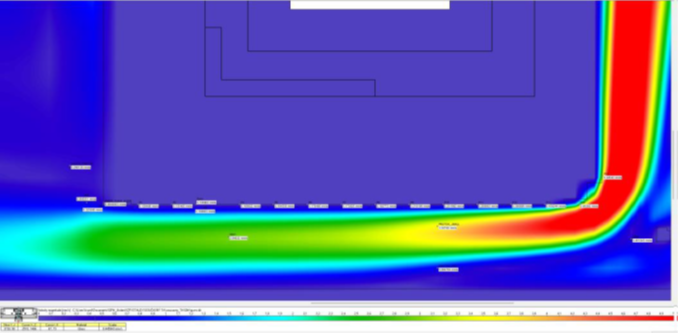
A collaboration between GS and SEFPRO on a throat corrosion simulation will be shown in this presentation. The real project of Crystalex (tableware glass manufacturer from Czechia) is used. The GFM (Glass furnace model) is used in this case for calculating the temperature and velocity distribution in the vicinity of throat blocks. These results are then used as boundary conditions for SEFPRO’s corrosion model. An iterative approach is used to simulate time steps representing the corrosion of throat. Results of the simulations are compared with the real measurements from Crystalex after certain time of production.
Target of this cooperation is to prolong the lifetime of the glass furnace and thus help decreasing the costs and increase the sustainability of the production.


Abstract 3: Utilization of variable renewable energy in the glass industry
The glass industry today depends heavily on fossil fuels and a stable electricity supply to keep production running smoothly. However, this reliance comes with significant environmental costs. The carbon emissions from glass manufacturing, known as Scope 1 and 2 emissions, vary depending on the location of the factory and the energy mix in that region.
In the near future, renewable energy sources like solar and wind will play a much larger role in the global energy mix. According to the International Renewable Energy Agency (IRENA), renewable energy is expected to make up 68% of the world’s energy mix by 2030. Of this, two-third will come from variable renewable energy (VRE) sources like wind and solar photovoltaic.
The rise of VRE will bring fluctuations in energy supply, which will also affect energy prices. Industries that can adapt their processes to take advantage of these fluctuations could benefit from lower energy costs during times of peak renewable energy supply.
This paper explores existing solutions and new technologies that can help the glass industry transition to a low-carbon future. By aligning production with renewable energy availability, the glass industry can reduce its environmental impact while remaining competitive in a changing energy landscape.
