The Czech & Slovak Glass Conference
The Czech and Slovak Glass Conference 2025 will be held in Trenčín, Slovakia, from November 12–14, under this year’s theme: Innovation and Sustainability in the Glass Industry.
Meet Glass Service at the Czech & Slovak Glass Conference
Abstract 1: Decarbonization & Sustainability Pathway of the Glass Industry: Challenges, Opportunities Across Segments, and Possible Solutions
The European Union has established stringent targets for CO₂ emissions over the next 30 years. By 2030, emissions must be reduced by 55% compared to 1990 levels, with the ultimate goal of achieving climate neutrality by 2050. It is evident that these ambitious targets cannot be achieved using current furnace designs. Although these regulations apply to the EU, CO₂ reduction is becoming a priority in other regions worldwide, with the possible exception of the United States at present.
We are living in the Glass Age, where glass has become indispensable in our daily lives. From food packaging, drinking glasses, and pharmaceutical containers to window glass, automotive components, communication fibers, and more recently, data storage and photonic glass-based CPUs, glass is everywhere. Furthermore, glass plays a critical role in the generation of renewable energy, particularly in wind turbines and solar panels.
The International Commission on Glass (ICG) has a pivotal role in fostering collaboration and knowledge exchange across regions by organizing conferences focused on sustainability. To achieve meaningful reductions in carbon emissions, innovative furnace designs and new technologies must be developed. Such advancements require the use of validated Computational Fluid Dynamics (CFD) tools like the GS Glass Furnace Model (GS GFM). No glass producer would risk building a new furnace concept capable of melting over 100 tons per day without rigorous analysis, calculations, and CFD modeling. Recent trends show increasing interest in reducing carbon emissions through greater reliance on electric melting or hydrogen, similar to the widespread adoption of CFD modeling during the rise of oxy-fuel technologies. Now, with the next generation of large hybrid furnaces (with over 50% electric boosting) or fully electric melters, the demand for CFD modeling is rising once again.
These complex furnaces, with multiple heat inputs, also require advanced control systems, such as Model-Based Predictive Control, to optimize the balance between electricity and natural gas usage. This approach considers fluctuating costs and aims to maximize carbon reduction.

Abstract 2: Mathematical modelling of glass furnaces and its importance for simulation of refractory materials corrosion
Glass Furnace Model (GFM) is internally developed software in Glass Service, a.s (GS). for understanding the processes in glass melting furnaces. It uses the CFD mathematical modelling approach and is perfect for evaluation and visualisation of the most important parameters within the furnace (e.g. glass and combustible flows, temperatures, etc.). Basic information regarding the software and its usage will be presented.
GS became part of the SEFPRO in 2024. This connection is beneficial as it enhances the efforts to find the best solutions for optimizing customer’s furnaces (geometry, operational parameters and also used refractories).
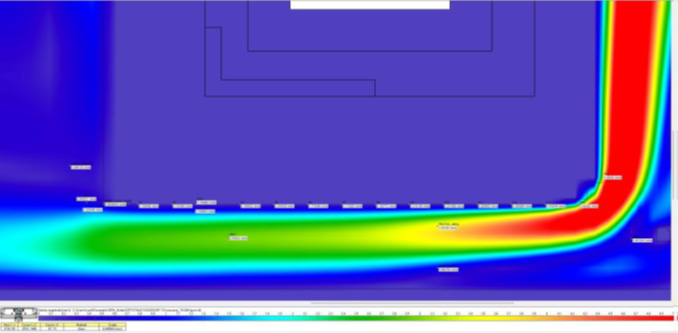
A collaboration between GS and SEFPRO on a throat corrosion simulation will also be shown in this presentation. The real project of Crystalex (tableware glass manufacturer from Czechia) is used. The GFM (Glass furnace model) is used in this case for calculating the temperature and velocity distribution in the vicinity of throat blocks. These results are then used as boundary conditions for SEFPRO’s corrosion model. An iterative approach is used to simulate time steps representing the corrosion of throat. Results of the simulations are compared with the real measurements from Crystalex after certain time of production.
Target of this cooperation is to prolong the lifetime of the glass furnace and thus help decreasing the costs and increase the sustainability of the production.