To say the pharma glass packaging industry has experienced significant growth over the last few years would be an understatement. Thanks to properties such as superior durability and resistance to contamination, more and more drug manufacturers are packaging their products in glass bottles, containers, ampoules, pre-fillable syringes, tubes, and vials. This demand has buoyed the global pharma glass packaging market, which is estimated to have crossed $17 billion in 2021 and is projected to grow at a CAGR of 9.2 percent until the end of the decade.
However, with the surging demand for glass for pharma-specific applications, glassmakers are facing a new challenge. Intensive energy use and related environmental concerns are some of the critical issues that the sector needs to address and overcome. With pressure building on pharma manufacturers to become more sustainable in light of the IPCC’s Sixth Assessment Report, glassmakers catering to the industry are now wondering how they can fulfil the growing demand while reducing emissions. The answer to this industry-defining question might lie in adopting innovative refractory solutions.
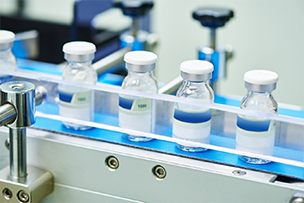
Handling the heat: how innovative refractory solutions will shape the industry's future
The glass business is undergoing a radical shift with a strong emphasis on environmental protection, just like many other sectors. More than ever, the focus is on furnace efficiency and the resulting CO2 and NOx emissions. Refractories and refractory solutions can complement these changes with cutting-edge technology and innovation. This is where advanced refractory solutions can play a significant role to help shape the future of the sector.
New melting technologies are driving the need for innovative solutions, co-designed by glassmakers and refractory experts. SEFPRO, a leading refractory supplier to the glass sector, is a pioneer in the production of fused cast and sintered refractories as well as associated service offerings. The company is one of the biggest manufacturers of refractories for glass-melting furnaces and the only one with a global footprint, with ten manufacturing facilities across the world including two in India. Innovation is supported by four R&D centres in India, China, France and the US.
Carbon neutrality reduction should go beyond unrealistic claims. There is a stringent need to reduce the impact of manufacturing operations by decreasing energy consumption and switching to renewable power sources. Glassmakers should optimise regeneration to taper the fuel used in producing the same quantity of glass. Solutions like increased electrical boosting, and hydrogen firing can also effectively be utilised in furnaces with more sustainable melting technologies.
Identifying opportunities to foster sustainability in the refractories industry
The sustainability expectations of pharma companies for their packaging suppliers are growing as consumers are becoming more sensitive to these issues. The pharma packaging industry must improve its environmental impact and glass is a key material for its future. Endlessly recyclable, glass contributes to companies’ circularity objectives. However, the glassmaking process is highly energy intensive and leads to high CO2 emissions. Glassmakers must investigate new ways of making glass with low-carbon production processes to remain a relevant packaging option in a carbon-neutral world. India has set itself a target to achieve net zero by 2070.
The use of state-of-the-art refractory materials helps glassmakers ensure uniformity in their products and avoid defects. Due to this, they are able to meet the demanding quality criteria, such as decarbonising the glassmaking process to manufacture glass suitable for the pharmaceutical industry. SEFPRO's latest innovation, XiROC® 95 RT , is designed to enhance pharmaceutical glass quality that lowers zirconia solubility into the glass, XiROC® 95 RT improves upward drilling corrosion resistance and increases throat lifetime.
Refractory solutions are going to play important role in the future in the ever-evolving field of glass manufacturing. The demand for pharma glass packaging will only increase in the coming years, which is why glassmakers must adopt innovative refractory solutions to ensure their future readiness. In the coming years, these innovative solutions will only witness a growth in demand as this is one of the most effective and sustainable options in the pharma glass packaging space.