With the low carbon objective of the glass industry, glassmakers are exploring ways to reduce their CO2 emissions. In line with this goal, and to open up new development opportunities, SEFPRO has designed a unique production line. Innovative, highly flexible, and automated, it will be able to manufacture various standards of refractory solutions.
The advantages of a flexible refractory line
Initially, this automated line will increase production capacity for Cruciforms® refractories which are installed in the regenerators of glass furnaces to boost heat exchange.
Thanks to their unique shapes and because they are made of fused-cast material, Cruciforms® checkerpack enable to reduce the energy consumption by several percentages from the very beginning of the furnace campaign while increasing the lifetime of the regenerators. Their corrosion resistance reduces the aging, thus increasing the thermal performances of regenerators with less energy.
These solutions, which are unique on the market for their environmental performance and durability over time, has celebrated 50 years of success in 2023.
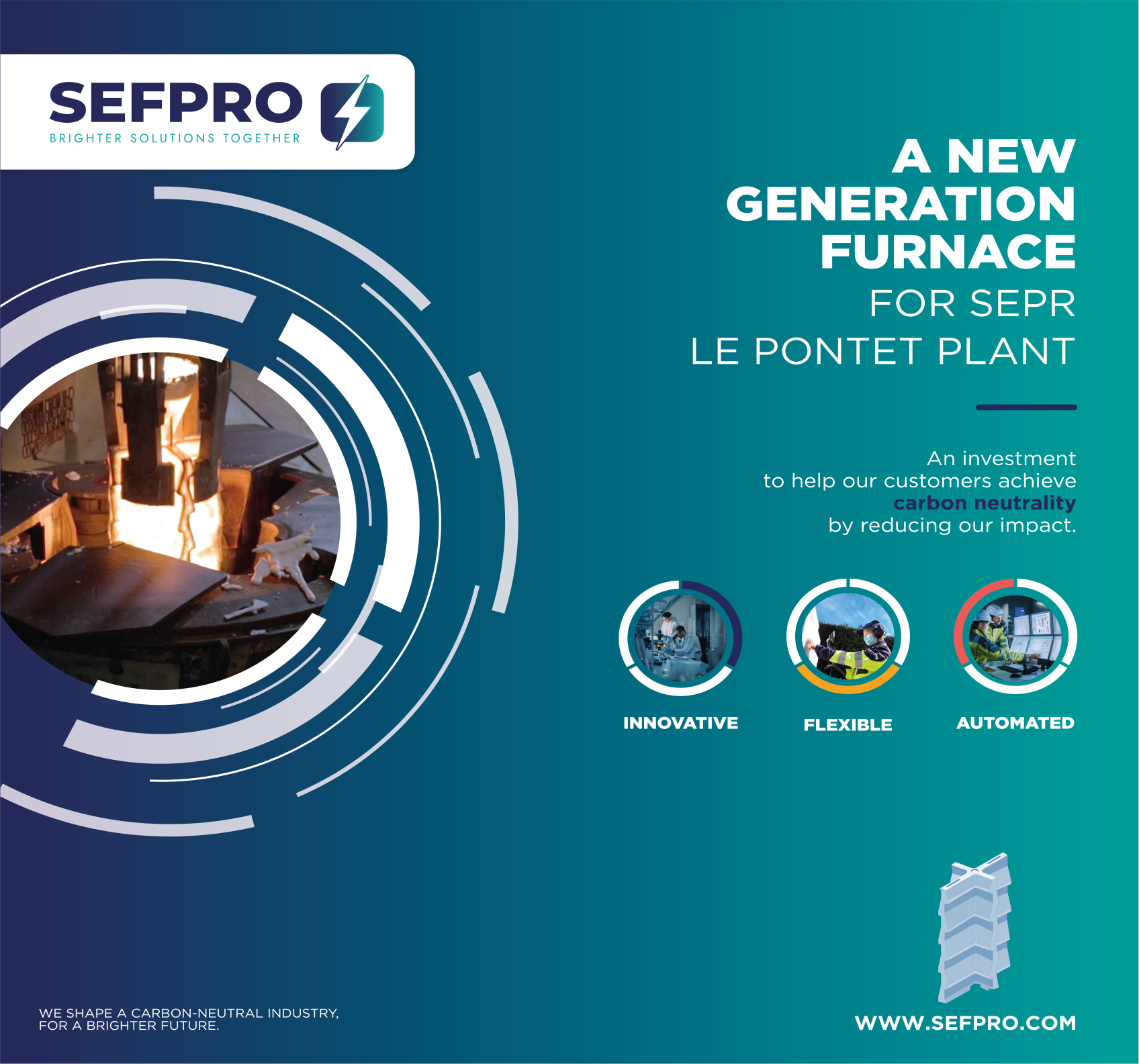
Later, this production line will be extended to other fused-cast standard solutions such as paving tiles - essential for reinforcing bottom of electric or electrically boosted furnaces - or arch stones - suitable for oxy-fuel or hydrogen furnaces. All these solutions have one thing in common, they aim to support SEFPRO customers' transition to low-carbon glass manufacturing.
Supporting SEFPRO sustainability roadmap
Beyond strengthening SEFPRO's ability to provide sustainable solutions to its customers, this investment is fully in line with its sustainability roadmap, both in terms of carbon emissions and circularity. Compared with traditional kilns, this new energy requirement for annealing is reduced by 65% with current technology standards.
In parallel with the implementation of this innovative furnace, several projects are underway to increase the use of secondary raw materials, to avoid the depletion of natural resources.
Given its positive impact in terms of decarbonization of the glass sector, this project is supported by several French organizations such as ADEME and Territoire d'Industrie - France Relance.
Keep in touch with SEFPRO networks to stay informed!
Contact us

The glass industry faces a challenge to reduce the environmental footprint of its glass...
