How to reduce heat losses in reinforcement glass furnaces?
When applied to a glass furnace melter crown, thicker insulation means greater weight and higher constraints on each block of the crown. As the maximum acceptable load decreases with temperature, the risk is consequently exposure of the crown material to a load above its mechanical limit given by the nil creeping curve. The crown may start sagging, and the creeping resistance is challenged.
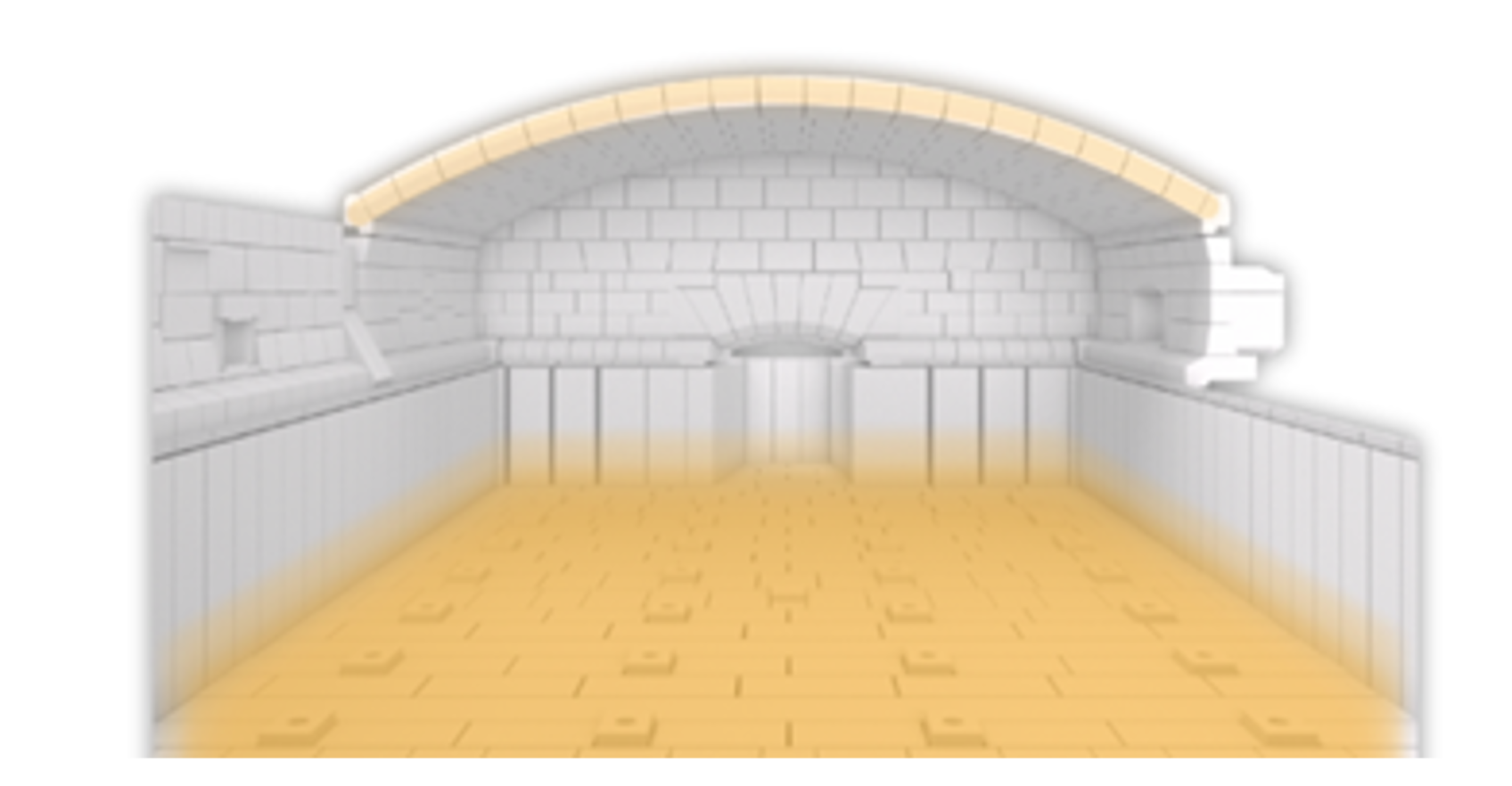
High creep resistance crown material with the use of BP Mullite REC solution
BP Mullite REC superstructure opens the way to new operating conditions that were not previously achievable to reinforcement fiber glass, textile fiber glass, vitroceramic and borosilicate glass furnaces. It allows to increase the crown temperature by more than 100°C while allowing a safer operation thanks to a much higher creep resistance, up to 6 times at 1,700°C.
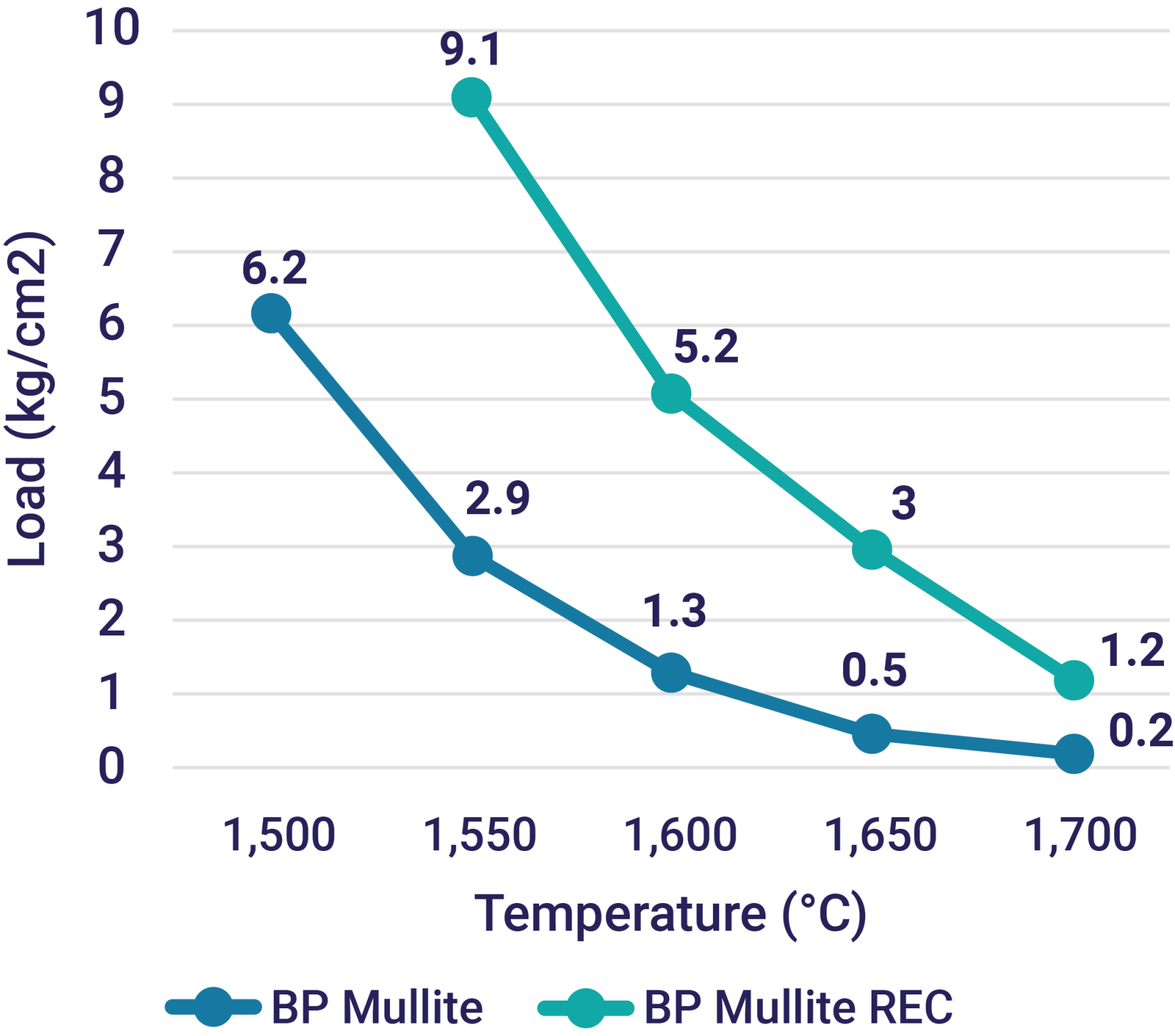
A crown material being able to withstand a higher load at higher temperature helps reducing superstructure energy losses by allowing a much heavier insulating package.
Higher refractoriness under load also enable to increase the glass melting temperature in order to reach a higher pull (above 1,550°C and higher) and improve the manufacturing performance. Refractories integrity and stability during the whole campaign life are the key to high performance melting process, particularly critical for the crown application.
BP Mullite REC crown for reinforcement and textile fiber glass melting furnace is especially adapted to oxy-firing combustion and its high flame temperatures.
Thermal losses reduction in reinforcement glass furnaces
A concrete example on how the BP Mullite REC allows 60% heat losses reduction while securing the crown against risk of sagging:
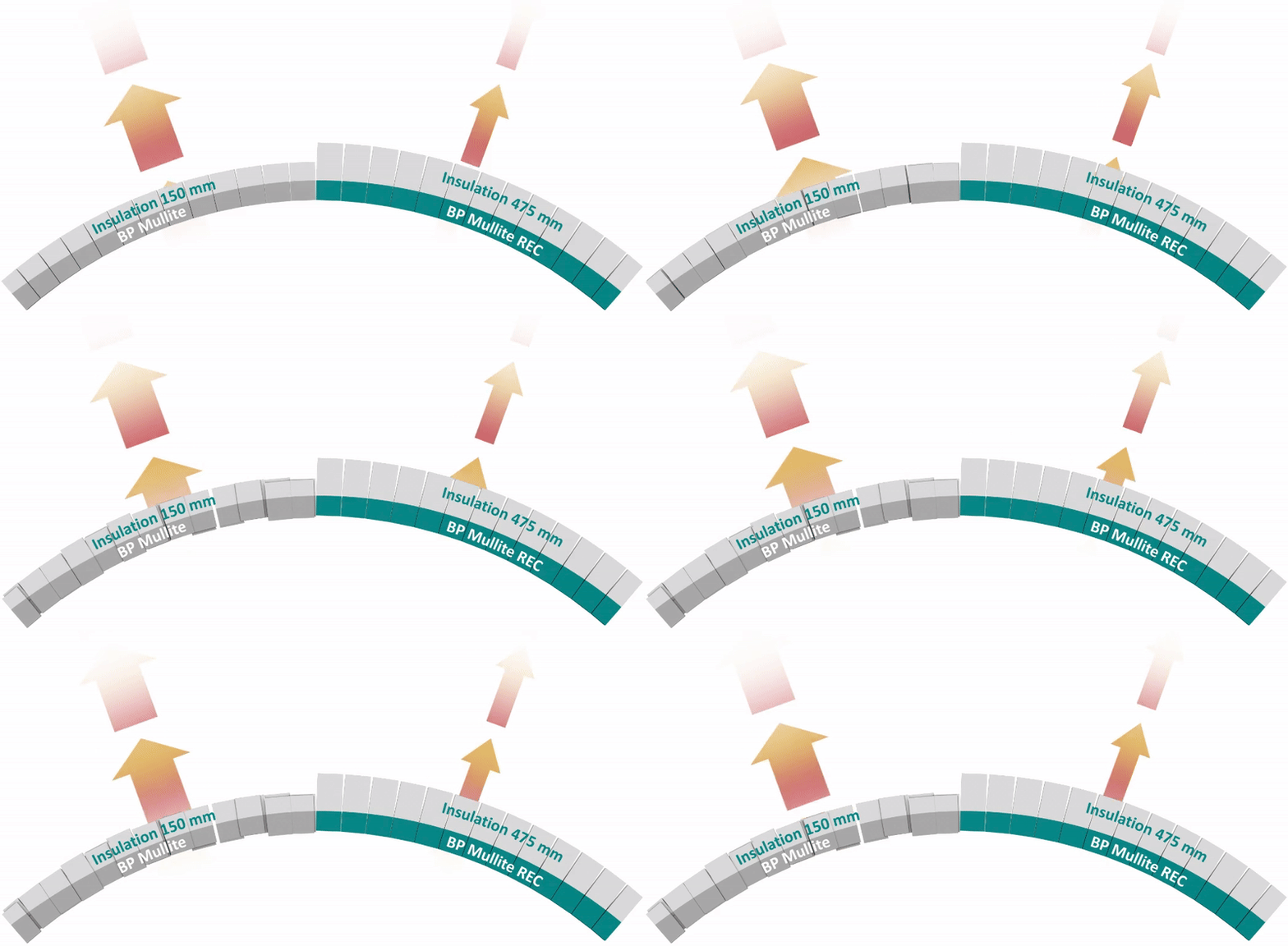
SEFPRO BP Mullite REC provides safer operation against risk of creeping and reduced the heat losses by more than half with the use of a much thicker insulation. The high refractoriness property of BP Mullite REC ensures a continuous operation without sagging even at very high temperature*.
*The calculation provided is for informational purposes only and should not be relied upon as financial, investment, or legal advice. The results obtained from this calculation may vary based on individual circumstances and assumptions made in the calculation.
Q&A
Is there any application where BP Mullite REC could not replace the standard BP Mullite material?
BP Mullite REC solution is suitable to all applications where BP Mullite is being currently used without any restriction.
How to appreciate if BP Mullite REC is required?
Through its numerical simulation service, SEFPRO provides crown stress calculation for any specific design. Such simulation will determine if the foreseen operating conditions does require the use of BP Mullite REC and will also suggest the optimized insulation package to reduce heat losses.