Impact of the concrete’s features on glass furnace operation
The key to an efficient concrete safety sublayer lies in three essential features: the chemical composition, the crystallography of the grains and the grain size distribution.
Our grains are obtained from our own SEFPRO furnaces producing fused-cast refractories, well known for their tight chemistry and low levels of impurities. Our grains have a high density and a high-quality crystallography leading to higher corrosion resistance.
The use of high-quality grains is not the only beneficial condition. Sublayers made from SEFPRO concretes have homogeneously distributed grains, tightly packed together. This compact grain arrangement significantly reduces porosity and the occurrence of cracking due to shrinkage, as well as the risk of concrete delamination.
These key features play a major role when the furnace is heated up to the glass melting temperature, resulting in different expansion rates between the various refractory layers composing the furnace bottom. Our concretes are designed to ensure an optimum joint closure.
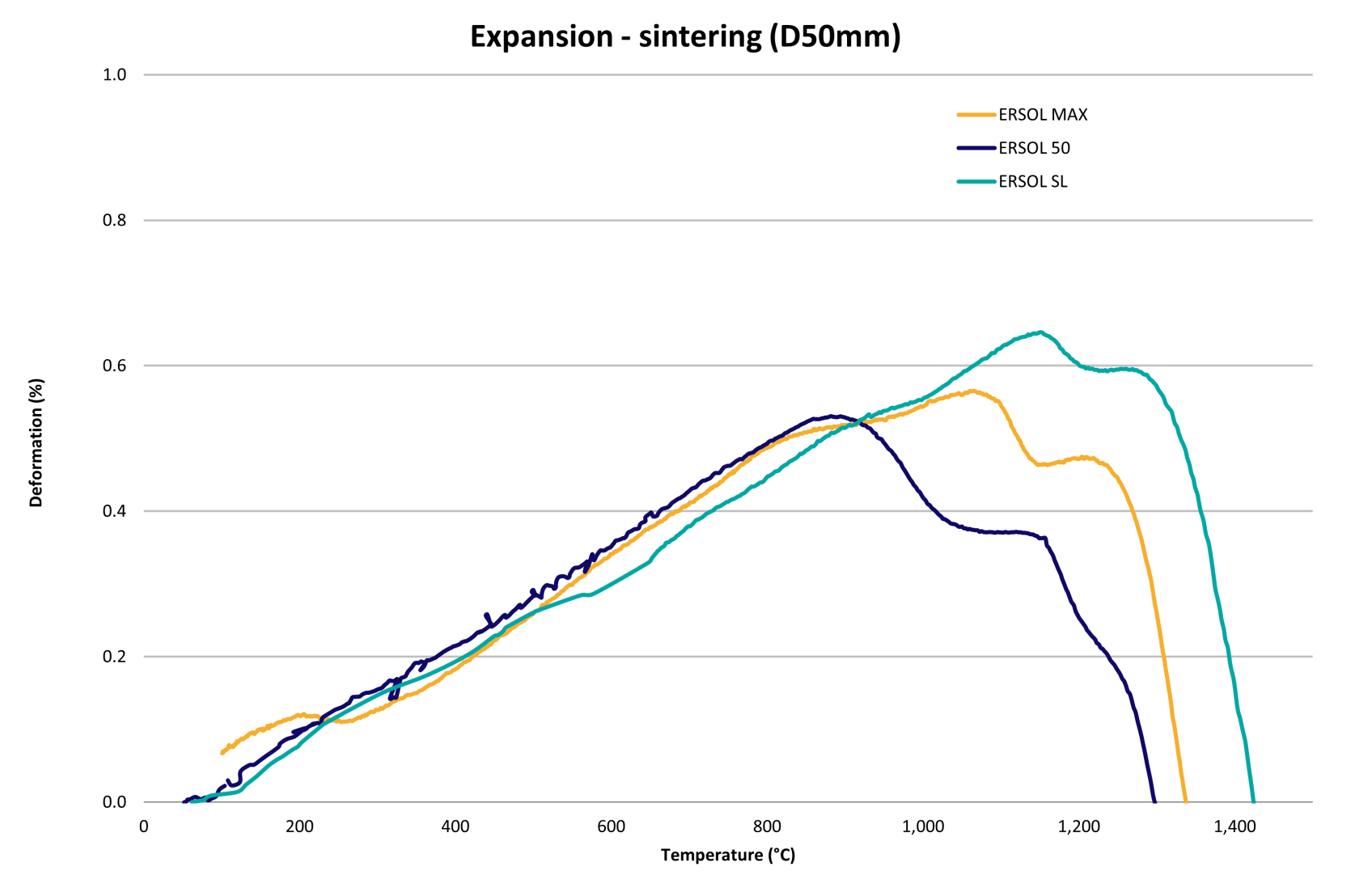
Having close control over the thermal expansion of the concrete layer beneath the tiles is thus an absolute requirement to avoid cracks and delamination, which are frequent causes of glass infiltrations.
In addition to the concrete performance, SEFPRO strives to make the implementation of its concretes as simple as possible for operators by using additives to enhance rheological behavior. It thereby ensures the concrete will reach all relevant areas of the furnace, including the farthest areas, and contributes to an excellent flatness before laying fused-cast tiles.
What makes good refractory mortar?
Carefully selecting the refractory concretes during the furnace design phase is an essential step to avoid severe issues later during the glass furnace campaign and to optimize furnace performance and lifetime. SEFPRO offers various concrete grades to suit various furnace areas and glass applications.
SEFPRO can provide refractory material selection services, as well as tutorials in various languages, easy to understand for glass makers and service companies in charge of furnace repairs.
Q&A
SEFPRO concretes contain additives allowing to achieve the adequate rheology when pouring. These additives require, at least 10 minutes mixing time to activate their properties. If the concrete still looks dry after 10 min mixing, keep mixing until 15mins. It is highly prohibited to add more water, the appropriate water content is indicated in our tutorials.
What is the right temperature to pour SEFPRO concretes?
The ideal temperature is ranging from 10°C to 30°C. For lower or higher temperature, SEFPRO propose accelerating or retarding agents to be added when mixing the concrete. We remind also that setting time is highly dependent on temperature and moisture during the pouring operation.
How to repair a concrete sublayer?
SEFPRO CARE is offering a wide range of solution of cold or hot repair of furnace bottoms.